Last updated: October 2026
Short answer: to get cited in Google AI Mode, your page has to answer the whole conversation, not just the first question. AI Mode takes a long, specific prompt, splits it into many smaller searches, and then keeps going when the person asks a follow-up. The pages it cites are the ones that rank for those smaller searches, state the key facts in plain sentences near the top, and cover the next obvious question before anyone asks it.
I started checking AI Mode separately from AI Overviews earlier this year, mostly out of irritation. A page would sit happily in the AI Overview for a query, and then I’d open AI Mode, type the same thing the way a real person talks, and the page was nowhere. Different sources. Sometimes completely different.
That’s not a bug. Google has said the two features can use different models and techniques, so the answers and the links can differ. Which means “we’re in the AI Overview” tells you very little about AI Mode. You have to work on it on purpose.
Here’s how I do that.
Why AI Mode picks different sources
People type more into it
Nobody types three words into AI Mode. They type a paragraph. “I run a small accounting practice with two staff, which bookkeeping software handles GST filing and doesn’t need a full-time admin?” That’s one prompt carrying five or six separate questions: business size, the job to be done, a tax requirement, a skill limit, maybe a budget.
A short query like “bookkeeping software” can be answered from general knowledge. A prompt with that much context can’t. The system has to go and find pages that deal with each piece, and that’s the opening for a smaller site. Big brands win the broad term. The specific, layered question is where a focused page gets a look.
Fan-out goes wide
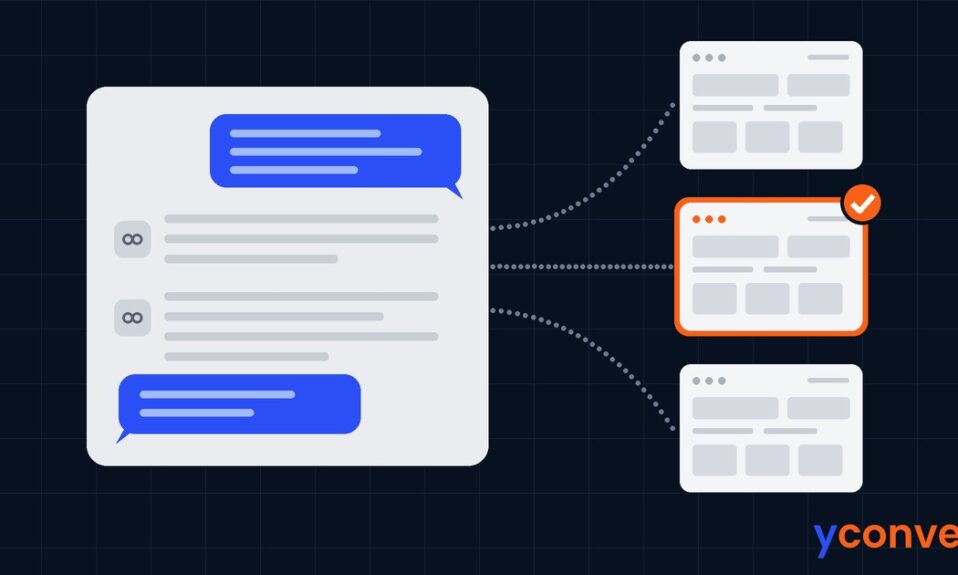
Google has described this openly: AI Mode breaks the question into subtopics and runs many searches at once, then pulls the answer together from what comes back. I think of it as the prompt being exploded into a list of mini-queries. “Best bookkeeping software for small accounting firms.” “Bookkeeping software GST filing.” “Bookkeeping software easy setup.” “X vs Y for small firms.”
If your page doesn’t rank, or at least show up, for any of those mini-queries, it isn’t in the pool. It doesn’t matter how good it is. So the first job isn’t clever wording. It’s making sure the page earns a place in the ordinary results for the pieces of the question.
The follow-up is half the game
This is the part most people miss. AI Mode is a conversation. The person reads the answer, then asks “which of those is cheapest?” or “does that work on a Mac?” From what I’ve seen, the follow-up answer tends to lean on the sources already in play, going deeper into them rather than starting fresh.
So being cited once in the first answer is worth more than it looks. And a page that already contains the answer to the likely follow-up has a second chance to be quoted.
AI Overviews vs AI Mode: what changes for your page
| AI Overviews | AI Mode | |
|---|---|---|
| Typical input | Short query typed into normal Search | Long, conversational prompt with context |
| Answer shape | Brief summary above the results | Longer answer, often with structure and many links |
| Follow-ups | One answer, then the regular results | Multi-turn, keeps going on the same topic |
| Where sources come from | Pages ranking for the query and close variants | Pages ranking for many fanned-out sub-queries |
| What helps most | A clear answer near the top | Coverage of the sub-questions and the next question |
Both still sit on top of Google’s normal ranking and quality systems. That’s the bit people want to skip, and you can’t. If the page isn’t indexed and eligible to show a snippet, it can’t be a supporting link in either one.
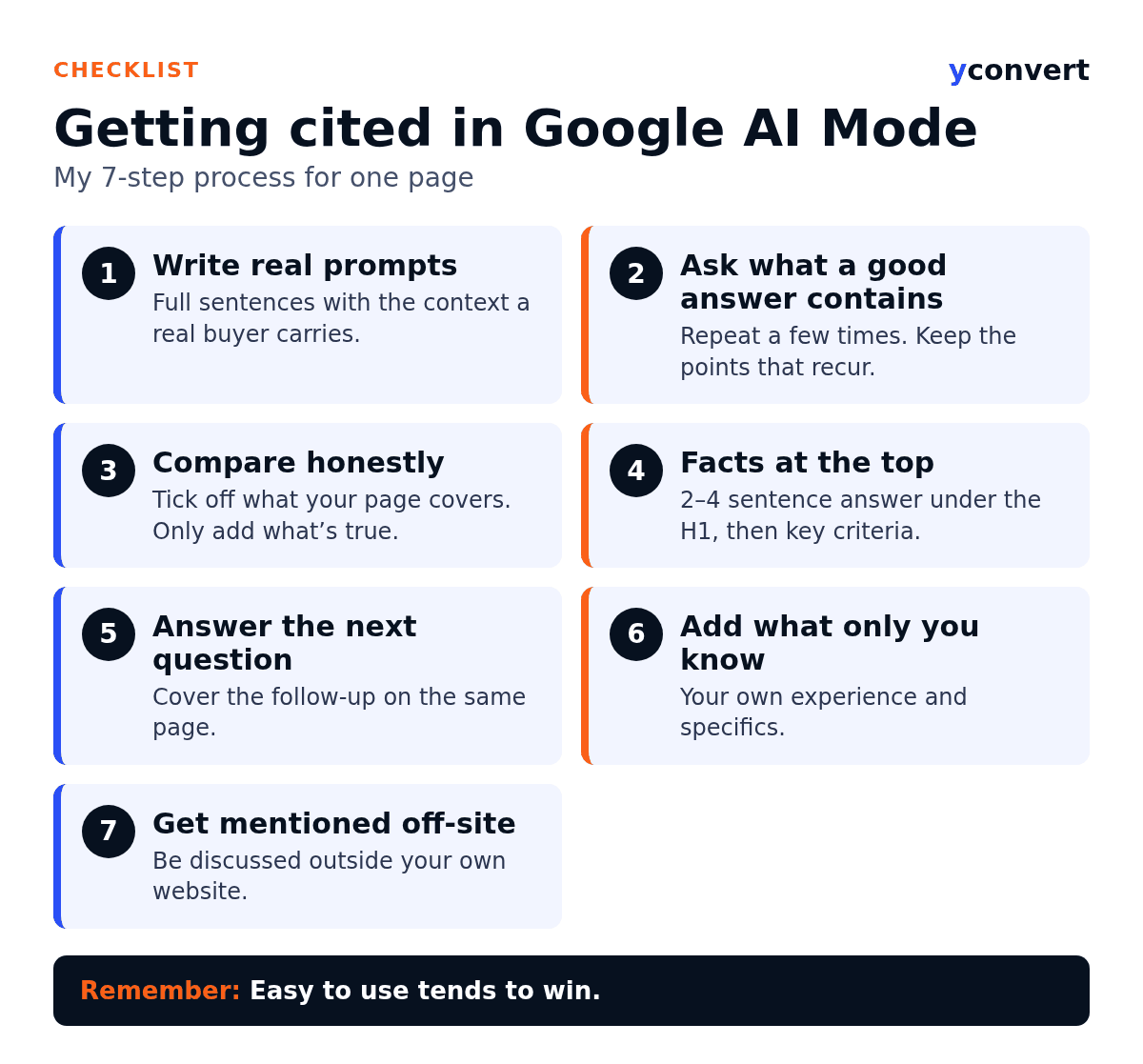
My process for getting a page cited in AI Mode
1. Write the prompt the way a customer would
Before touching the page, I write three or four realistic prompts for it. Not keywords. Full sentences, with the context a real buyer carries around.
For a veterinary clinic’s page on dog dental cleaning, that might be: “My 9 year old dog has bad breath and the vet says he needs a dental cleaning under anaesthesia, is that safe for older dogs and what does recovery look like?” Then I run each prompt in AI Mode and note who gets cited.
If you only test the short keyword, you’re testing a different product.
2. Ask the model what a good answer should contain
This is the trick I like most, and it’s simple. Instead of asking AI Mode (or any chat assistant) for the answer, ask it what a trustworthy answer should include. “What should someone look for when choosing a clinic for a senior dog’s dental cleaning?”
You get a checklist back. Pre-anaesthetic blood work. How the dog is monitored during the procedure. Whether X-rays are taken. Pain management after. Typical recovery time. These are the criteria the model already associates with a good answer on that topic.
Run it a few times, with a couple of different phrasings, and keep the points that keep coming up. That list is your brief.
3. Compare the checklist to your page, honestly
Now open your own page and tick off what’s there. In my experience most pages cover two or three points well and skip the rest, usually the exact specifics the model was looking for. The clinic page talks about “gentle, caring dental services” and never says whether X-rays are included.
Vague language is the problem. “Great service” matches nothing. “Every dental cleaning includes full-mouth X-rays and blood work for dogs over seven” matches the checklist directly.
Only add what’s true. If the clinic doesn’t take X-rays, don’t write that it does. Say what it actually does, and say it plainly.
4. Put the important facts at the top
Once the gaps are filled, I move the key points up. A two to four sentence answer under the H1, then a short block that covers the main criteria in plain sentences. Price range if you can publish one. Who it’s for. What’s included. How long it takes.
The idea is to make your page the easiest source to use. If the system needs five facts and your page states all five clearly in one place, while the competitor scatters them across three pages, you’ve done the work for it. Easy tends to win.
5. Answer the next question in the same page
Then I write down the follow-ups. For a furniture store’s page on solid wood dining tables, the first prompt might be about which wood is most durable. The follow-ups are predictable: how to stop it from warping, how much it costs compared to engineered wood, delivery and assembly, what happens if a leg wobbles in a year.
Each of those gets its own short H2 or H3 with a direct answer underneath. Not a wall of text. A heading that reads like the question, then the answer in the first sentence.
One warning: don’t spin up a separate thin page for every variation of the question. One strong page that covers the cluster beats ten near-duplicates, and Google’s spam policies already treat mass-produced pages made mainly to manipulate rankings as a problem.
6. Add what only you know
This is where most sites lose. Generic advice (“5 tips for choosing a dining table”) is the kind of thing any model can write without you. It has no reason to cite you for it.
What it can’t write is your experience. A wedding photographer who explains why they always scout the venue the evening before, at the same hour as the ceremony, because the light through those particular windows changes everything. A travel agent who explains what they actually do when a connecting flight is cancelled at midnight. Specific, first-hand, a little opinionated. That’s the material that gets quoted, because it isn’t available anywhere else.
7. Get mentioned outside your own site
AI answers lean on what others say about you, not only what you say about yourself. When AI Mode recommends a brand, it’s usually because several cited pages mention that brand. So two things help: getting your business included, honestly, in the roundups and comparisons that already get cited, and publishing your own comparison pages that are fair to competitors.
That second one surprises people. If your comparison page is genuinely useful and gets cited, it brings you along with it, even when the answer names a competitor first. I’d rather be the source behind the answer than missing from it.
What I don’t bother with
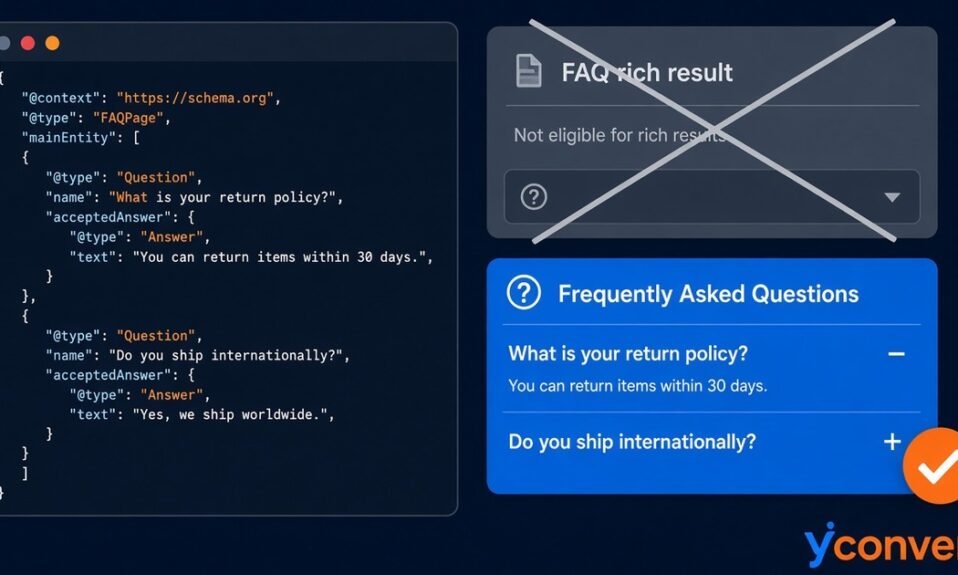
- Special AI files or new markup. Google has said you don’t need anything special to appear in its AI features. Schema still helps search engines understand the page, but it won’t rescue thin content.
- Rewriting everything for robots. Write for the person. Clear headings and direct answers help both.
- Chasing every short keyword. Broad terms often get answered without a click. The layered, specific questions are where citations happen.
- Fake reviews or planted mentions. They break Google’s spam policies and they tend to come back to bite you.
How I track AI Mode citations
I keep it boring. A sheet with the four or five realistic prompts per important page, run every couple of weeks. For each one I note whether we’re cited, who else is, and whether we come up again on the obvious follow-up. Citations rotate a lot, so one check means little. A trend over a month or two means something.
I also watch the page’s normal rankings for the fanned-out sub-queries, because if those slip, the AI Mode citation usually goes with them.
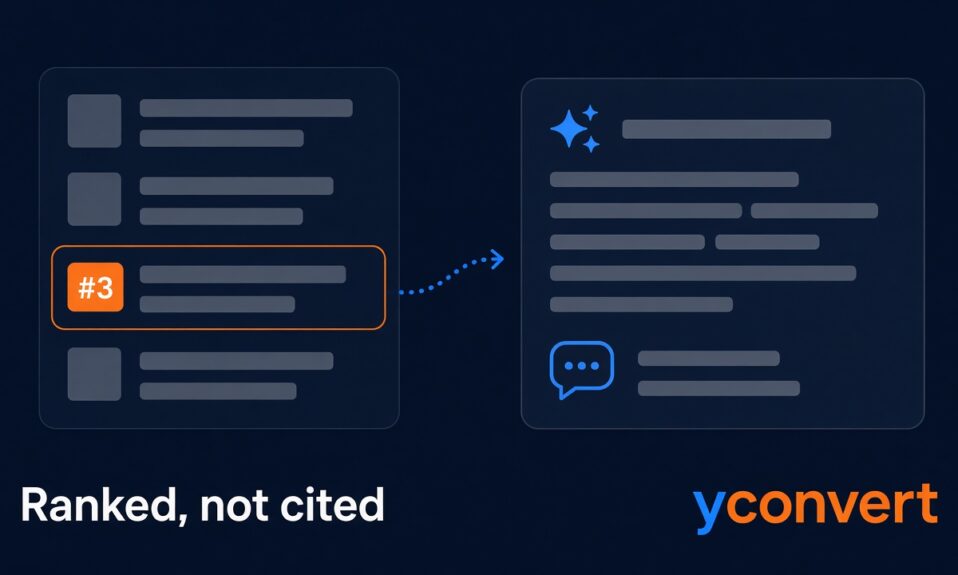
Related on Yconvert: if you rank but still aren’t quoted, start with why ranking pages get skipped by AI Overviews. For markup questions, see whether FAQ schema still helps. And for the full one-page review I run before any of this, here’s my landing page SEO audit checklist.
Frequently asked questions
Is getting cited in AI Mode different from AI Overviews?
Yes. Google has said the two can use different models and techniques, so they can show different answers and links. AI Mode also handles longer prompts and follow-up questions, which pulls in a wider set of sources.
Do I need to rank on Google to be cited in AI Mode?
In practice, yes. AI Mode is built on Google’s normal ranking and quality systems, and a page has to be indexed and eligible to show a snippet to appear as a supporting link. Ranking for the smaller sub-questions inside a prompt matters as much as ranking for the main keyword.
Does schema markup get me cited in AI Mode?
Not on its own. Schema helps search engines understand a page, but citations go to pages that clearly answer the question and its follow-ups. Make sure any markup matches what’s visible on the page.
How do I find out what AI Mode wants on my topic?
Ask it what a trustworthy answer should include for your topic, a few times with different wording, and list the points that keep coming up. Then compare that list with your page and add the true, specific details you’re missing.
How often should I check AI Mode citations?
Every couple of weeks for your most important pages is enough. Citations change often, so look at the trend over a month or two rather than a single check.
Check your page for AI Mode and AI Overviews
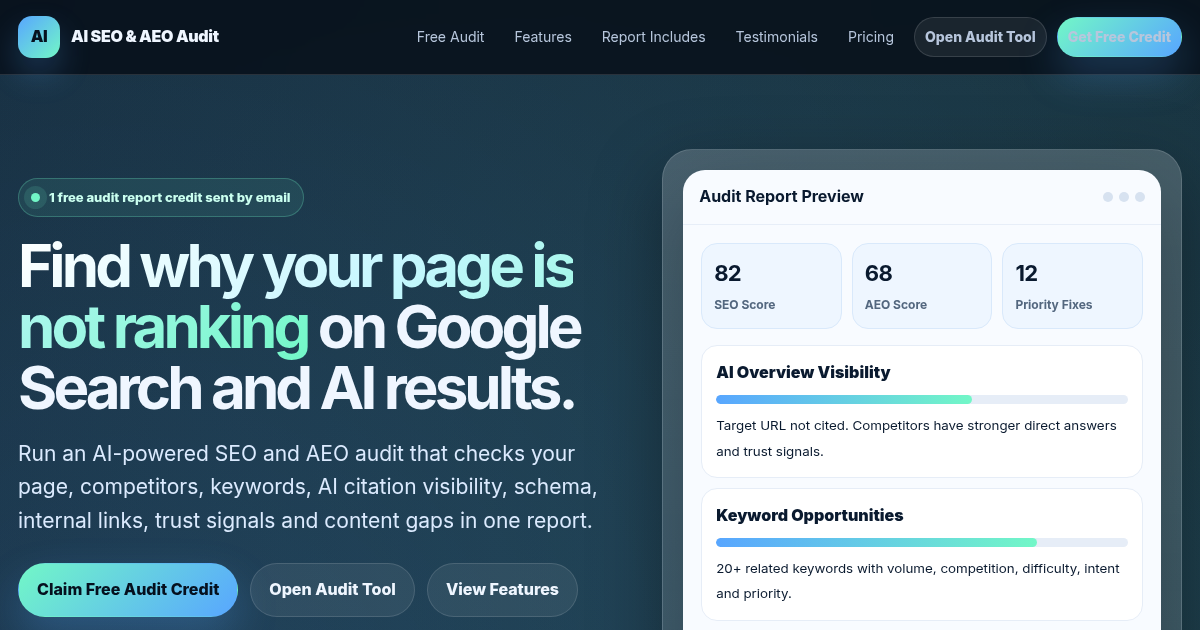
Our AI SEO & AEO audit tool looks at one URL for one keyword and shows its SEO and AEO scores, AI Overview and AI Mode citation visibility, competitor gaps, keyword opportunities, schema and internal link checks, with a PDF you can share. Your first report credit is free. After that it’s $2 per report, or 10 reports for $15 and 20 for $20.