Last updated: October 2026
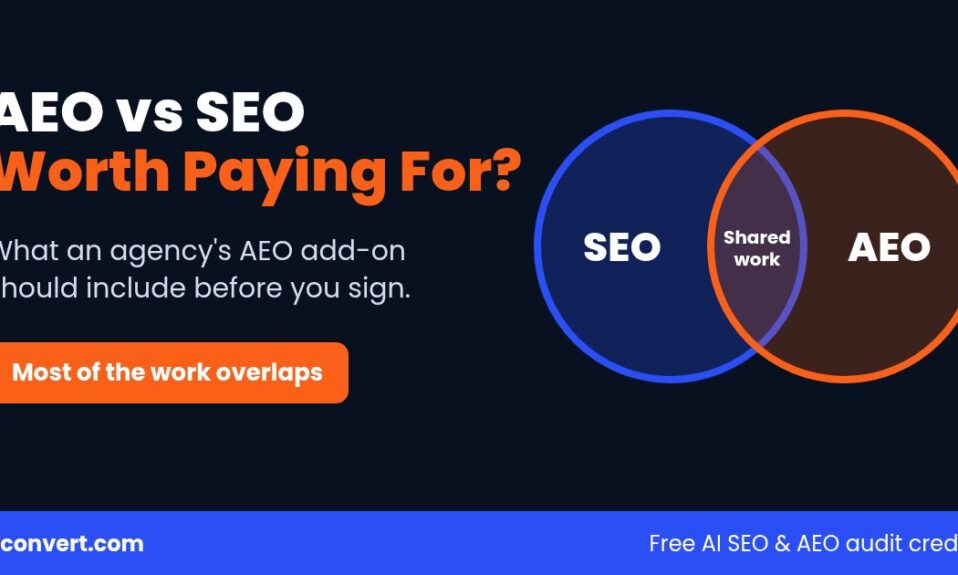
Short answer: in the AEO vs SEO question, for most small and mid-sized businesses AEO is not a separate thing worth a separate retainer. Most of what gets your pages quoted in AI answers is ordinary SEO done properly: pages that load, rank and answer the question clearly near the top. Pay extra for AEO only if the agency can name specific work that your SEO plan doesn’t already include, show you a baseline of where you’re mentioned today, and track it against real customer questions.
That’s my view after a lot of audits. It isn’t “AEO is a scam”. Some of it is genuinely new. But a big chunk of what’s being sold under the AEO label right now is SEO with a new invoice line.
So let me break it down the way I’d explain it to a client who just got the upsell email.
AEO vs SEO: what each one is actually trying to do
SEO tries to get your page ranked in the list of results, so someone clicks it.
AEO (answer engine optimization) tries to get your business or your page used inside an answer. That might be a Google AI Overview, AI Mode, or a chat assistant that names three companies and links to a couple of sources.
Different outcome, yes. But look at how the answer gets built. The assistant runs searches in the background, pulls pages that rank for those searches, and lifts the parts that answer the question cleanly. If your page can’t be found, crawled or trusted by a search engine, it’s not getting quoted either. That’s why I keep telling people SEO is the floor AEO stands on. You don’t get one without the other.
| SEO | AEO | |
|---|---|---|
| Goal | Rank and earn the click | Get named or quoted in the answer |
| Unit you work on | Keywords and pages | Questions, and the facts that answer them |
| What wins | Relevance, links, a good page experience | Clear answers, coverage of follow-up questions, consistent mentions elsewhere |
| How you measure it | Rankings, clicks, conversions | Mentions and citations for a fixed set of prompts, plus the leads that follow |
| Where most of the work happens | Your own site | Your site, plus other sites that talk about you |
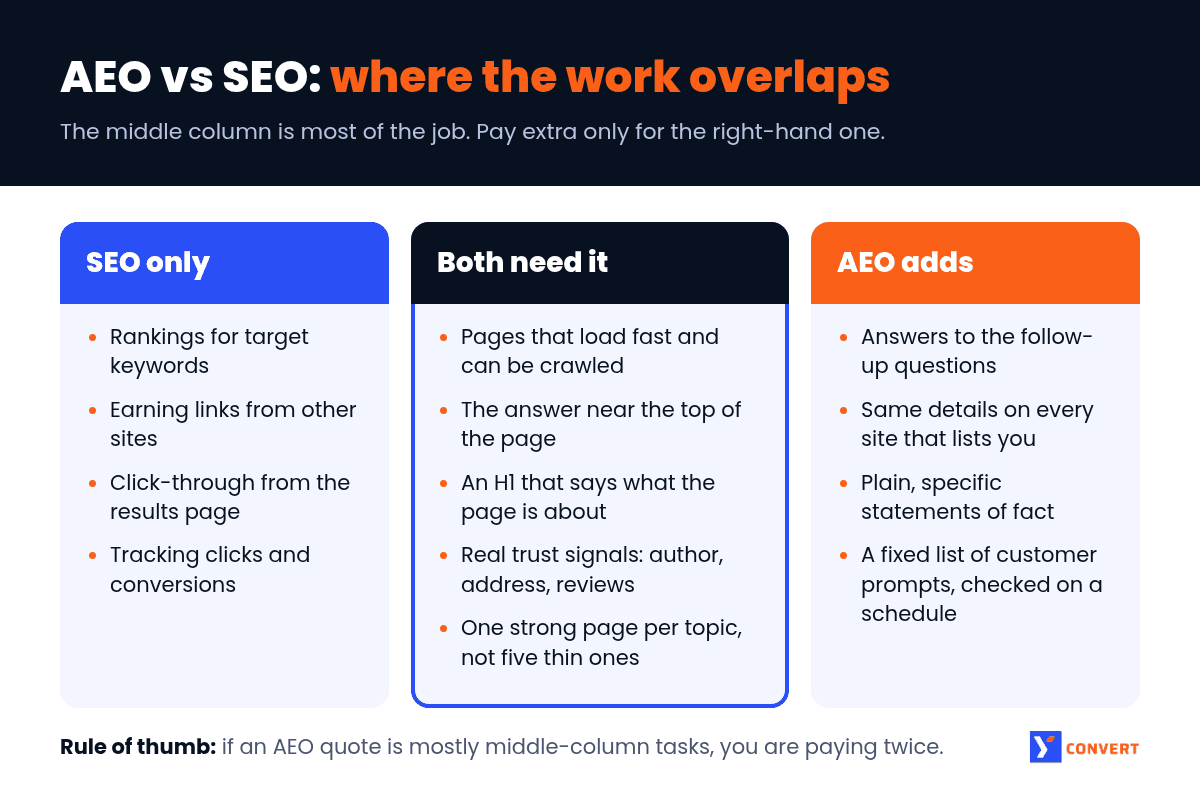
Where the two overlap (most of it)
When I audit a page for AI visibility, the fixes I write down are almost always things a good SEO should have flagged anyway:
- The answer is buried under three paragraphs of intro. Move it up.
- The H1 says something clever instead of what the page is about.
- The page targets one keyword and ignores the obvious next questions a buyer would ask.
- No author, no address, no proof the business is real.
- Thin pages competing with each other for the same topic.
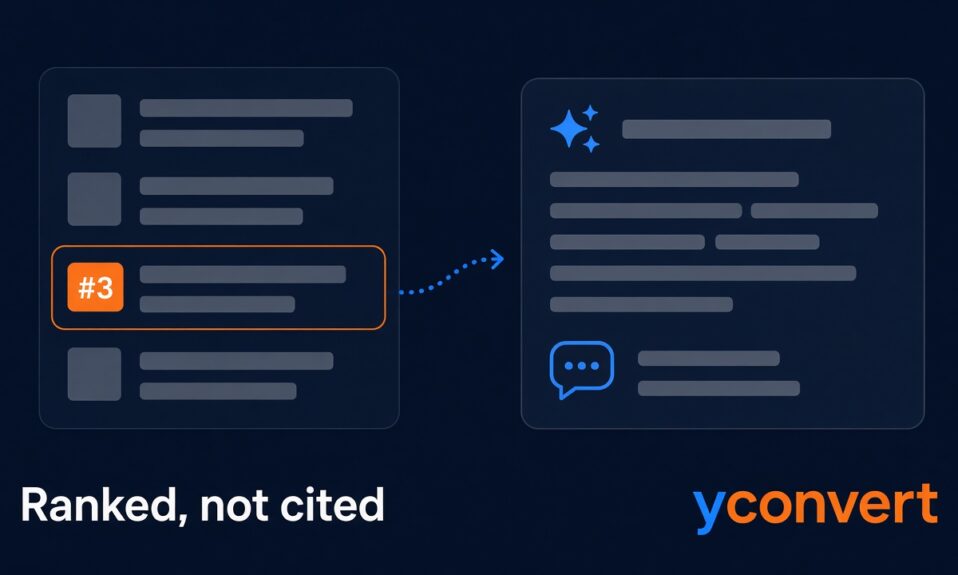
None of that is new. It’s just that AI answers punish these problems harder, because they skip a page entirely instead of ranking it a bit lower. I wrote about this pattern in why a page can rank on page 1 and still not get cited. Ranking gets you considered. Clarity gets you quoted.
What’s genuinely different (and might be worth paying for)
There is real AEO work that a standard SEO retainer often doesn’t cover. If an agency is selling you these, that’s a fair conversation:
1. Writing for questions, not keywords. People type long, specific prompts into assistants. “Best solar installer near me” turns into “is it worth putting solar on a 20-year-old roof, and who around here will check the roof first”. Covering those follow-up questions on your pages is content work that keyword-led SEO tends to miss.
2. Off-site consistency. Assistants lean on what other sites say about you, not just what you say about yourself. Directory listings, industry sites, review platforms, forum threads, trade press. If your hours, services or pricing differ across them, the assistant either gets confused or picks the wrong version. Cleaning that up is slow, unglamorous work. Worth paying for if you don’t have the time.
3. Prompt tracking. Someone has to pick a fixed set of real customer questions, run them on a schedule, and record who gets named. That’s a new kind of reporting. It’s useful. It’s also easy to fake with a pretty dashboard, so see the questions below.
4. Writing the facts plainly. Assistants quote sentences that state something specific: what you do, for whom, where, how long, what it includes. A lot of business websites are full of “we’re passionate about quality” and very little else. Rewriting key pages to say concrete, true things is real work, and it helps humans too.
If you want the hands-on version of points 1 and 4 for Google specifically, I went through it step by step in how to get cited in Google AI Mode.
When AEO is worth paying an agency for
Here’s how I’d think about it, with a few very different businesses.
A B2B packaging manufacturer. Buyers ask assistants for shortlists: “suppliers who can do food-safe printed cartons in small runs”. If the assistant names three competitors and not you, you never get the inquiry. For this kind of business, off-site mentions and question-led product pages matter a lot, and paying someone to work on them can make sense.
A solar installer. The questions are long, anxious and specific. Roof age, subsidies, payback, maintenance. This is exactly where AI answers show up and where a well-structured page can get quoted. Worth it, but only if the SEO basics are already done. If the service pages don’t rank at all, start there.
A neighbourhood bakery. Honestly? Mostly not worth a separate AEO fee. Most of the bakery’s customers find it through maps, reviews and word of mouth. Keep the business profile accurate, get reviews, have a clear page with what you make, prices for custom cakes and how much notice you need. That covers most of it. Spending a monthly retainer on “AI visibility” here is money that should go to photos and reviews.
An auto repair garage. Someone breaks down and asks their phone who’s open and nearby. That answer is pulled heavily from the local business profile and reviews. Some AEO-style cleanup (consistent details everywhere, a clear services page with what each job involves) helps. A big strategy deck doesn’t.
An interior design studio. Somewhere in the middle. People do ask assistants for “designers who specialise in small apartments” and the like. A studio with a clear niche written plainly on its site has a real shot. One that says “we do everything” doesn’t, and no agency fixes that for you. That’s a positioning call.
The pattern: the longer and more considered the buyer’s question, and the more they compare options before they call, the more AEO is worth. Quick, local, low-cost purchases need very little of it beyond good local SEO.
Red flags in an AEO pitch
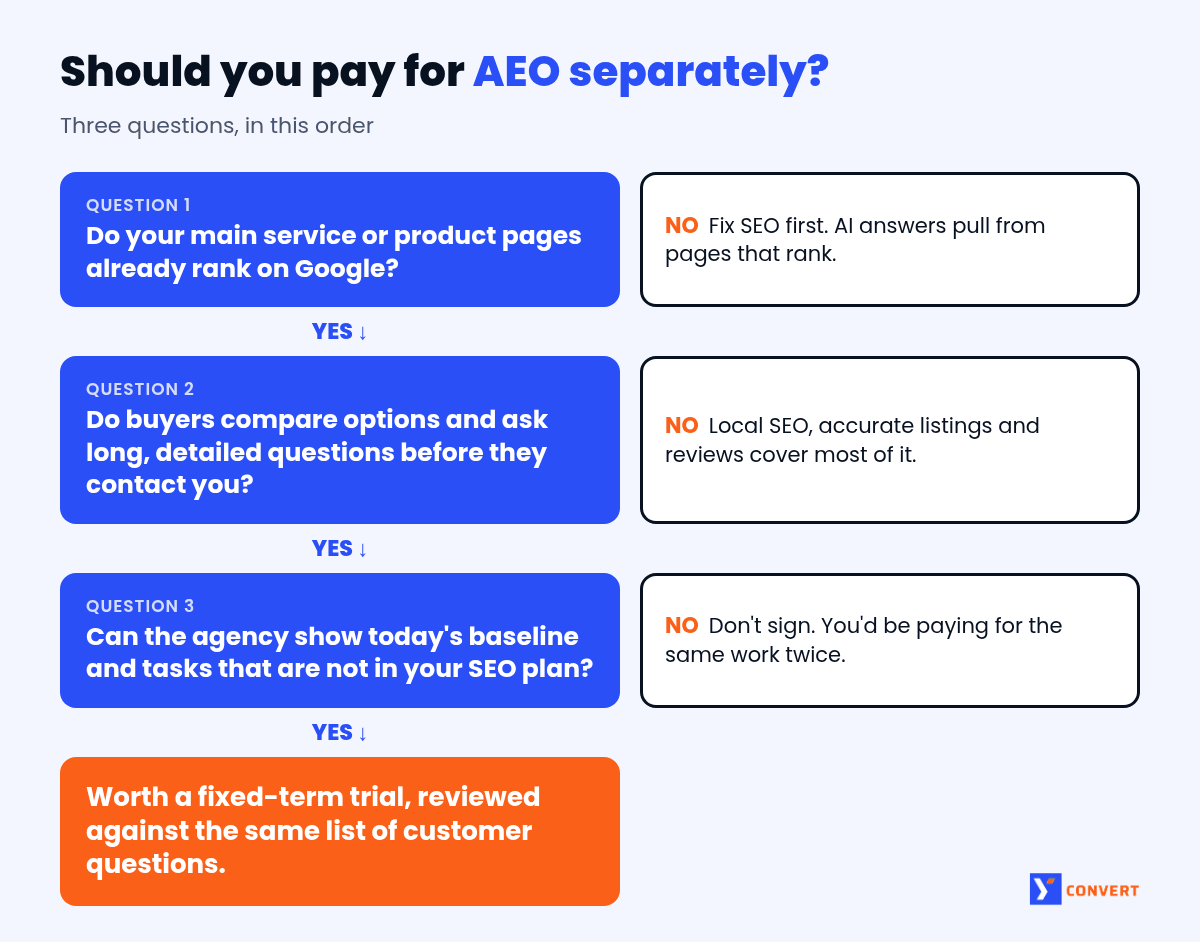
These are the ones that make me suspicious when a client forwards me a proposal:
- Guarantees. “We’ll get you to the top of AI answers.” Nobody controls what an assistant says on a given day. Answers change between runs.
- The deliverable is a file. Adding an llms.txt or extra schema can be fine housekeeping. It’s not a strategy, and it’s not a monthly retainer’s worth of work.
- No baseline. If they can’t show you where you’re mentioned today, for which questions, they can’t show you progress later.
- Same tasks, new price. Compare the AEO line item with your current SEO deliverables. If it’s the same list of blog posts and technical fixes with “AI” added to the names, you’re paying twice.
- Vanity dashboards. A visibility score with no list of the prompts behind it tells you nothing. Ask to see the raw questions and answers.
- Content volume as the plan. Forty new AI-written articles a month is the fastest way to make a site look less trustworthy, to people and to search engines.
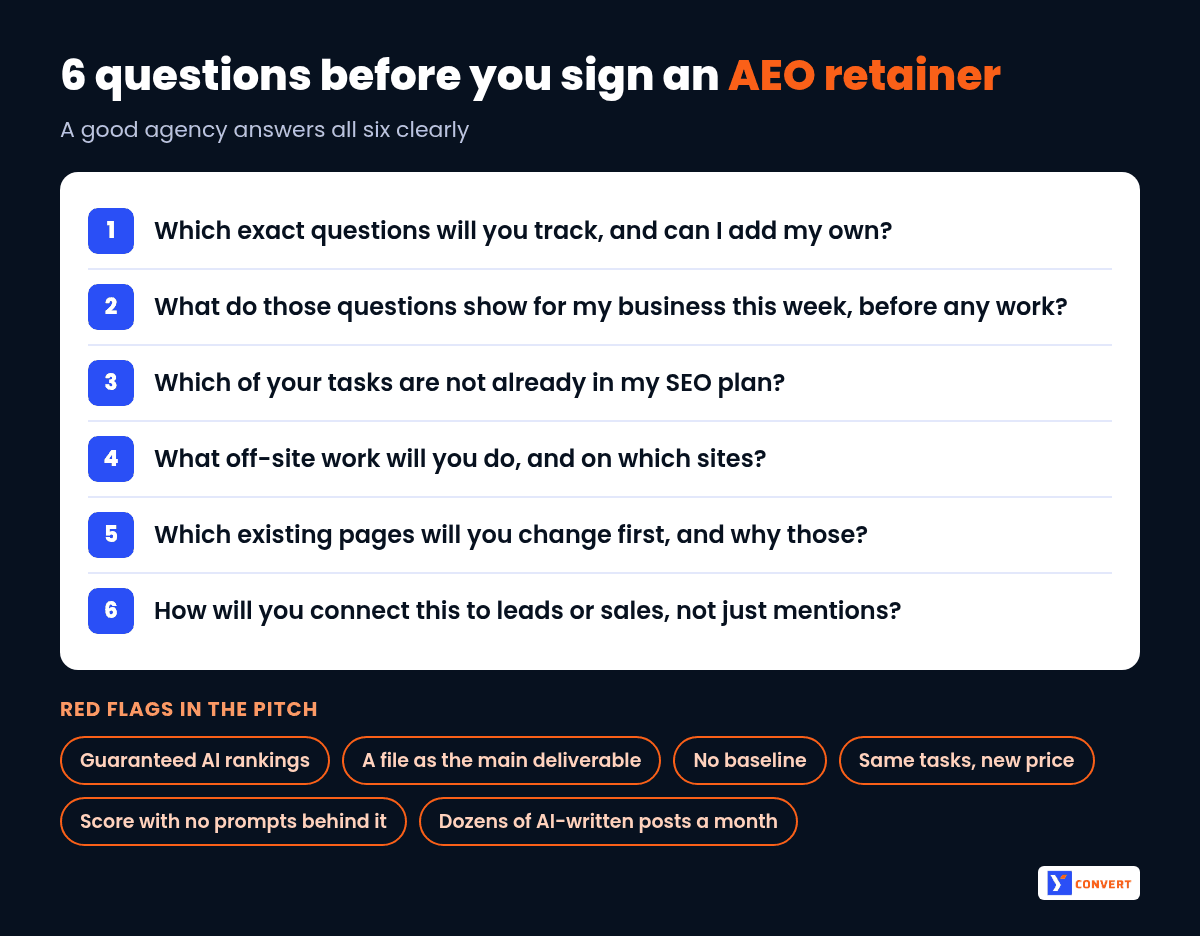
Questions I’d ask before signing
- Which exact questions will you track, and can I add my own?
- What did those questions show for my business this week, before you’ve done anything?
- Which of your tasks are not already in my SEO plan?
- What off-site work will you do, and where?
- What will you change on my existing pages first, and why those pages?
- How will you connect any of this to leads or sales, not just mentions?
A good agency will have straight answers to all six. If the answers are vague, the work probably will be too.
Check it yourself before you pay anyone
You can get a decent picture on your own in an afternoon. Pick five questions a real customer would ask. Run them in Google, AI Mode and one chat assistant. Write down who gets named and which pages get linked. Then look at your own page for the main question and be honest: is the answer in the first few lines? Is it specific?
If you want a structured way to do the page side, my landing page SEO audit checklist walks through what I check, in order. Or run the page through our AI SEO & AEO audit tool. It checks one URL against one keyword, gives you an SEO score and an AEO score, shows AI Overview and AI Mode citation visibility, and lists the fixes in priority order. The first report credit is free. After that it’s $2 per report, or 10 reports for $15 and 20 for $20.
Either way, you’ll walk into the agency call knowing what’s actually broken. That alone changes the conversation.
FAQ
What is the difference between AEO and SEO?
SEO aims to rank your page in search results so people click it. AEO aims to get your business or page named or quoted inside an AI answer, such as an AI Overview or a chat assistant’s reply. AEO depends on SEO, because assistants mostly pull from pages that search engines can find and trust.
Is AEO replacing SEO?
No. AI answers are built from pages that rank for the questions behind a prompt, so SEO is still the foundation. AEO adds work on top: answering follow-up questions, stating facts plainly, and keeping your details consistent across other sites.
Is AEO worth paying an agency for?
It can be for businesses whose buyers compare options and ask long, specific questions, like B2B suppliers or high-cost home services. For simple local businesses, good local SEO, accurate listings and reviews usually cover most of it. Only pay for AEO work that isn’t already in your SEO plan.
Can an agency guarantee my business shows up in AI answers?
No. AI answers change from one run to the next and no one controls them. An agency can improve your chances and track progress against a fixed set of questions, but a guarantee is a red flag.
How do I check if my business shows up in AI answers?
Pick a handful of real customer questions, run them in Google, AI Mode and a chat assistant, and note who gets named and linked. Repeat every couple of weeks, since answers change often. An audit tool can check the page side for you.